Pune to Nepal: flights, entry and hotels
A practical guide for travellers from Pune to Nepal, covering flights from Pune International Airport, entry rules for Indian passport holders, and tips for booking a stay.
Flights from Pune
Pune International Airport (PNQ) does not operate direct flights to Nepal. All routes involve a stop, typically at Delhi, Mumbai, or Kolkata. The total journey time is roughly 5 to 8 hours, depending on the layover duration. Early morning departures often have shorter waits. Airlines from Pune connect through their hubs in northern or western India. Check the current flight schedules for the most efficient connection. The flight from the transit hub to Kathmandu is about 1.5 to 2 hours. Book a single itinerary to protect the connection in case of delays. A layover of 2 to 3 hours is usually enough at Delhi or Mumbai; avoid layovers under 90 minutes.
When booking, consider the total travel time including the layover. Some connections may have waits of 4 to 6 hours, which can be used to explore the transit airport. Delhi and Mumbai airports have lounges, restaurants, and shopping areas. If you have a longer layover, you may exit the airport, but factor in time for security re-entry. Arrive at PNQ at least 2 hours before a domestic departure. Check baggage rules: some airlines require re-checking bags on separate tickets. A single ticket ensures your luggage is checked through to Kathmandu.
- Book flights with a single ticket to cover missed connections.
- Consider a longer layover to explore the transit city if time permits.
- Check baggage rules: some airlines require re-checking bags on separate tickets.
- Arrive at PNQ at least 2 hours before a domestic departure.
Entry rules for Indian passport holders
Indian citizens do not need a visa to enter Nepal. A valid passport is the recommended travel document. A voter ID card issued by the Election Commission of India is also accepted at the border, but airlines may require a passport for boarding. Carry a passport even if using a voter ID; some airlines refuse boarding without a passport for international flights. Check the official website of the Embassy of India in Kathmandu or the Immigration Office of Nepal before departure. Rules on accepted documents can change.
Carry a printed copy of your travel itinerary and proof of accommodation for immigration. You may also be asked for a return ticket or onward travel details. Keep a photocopy of your passport separate from the original. If you are travelling with a voter ID, confirm with your airline that they accept it for international travel. The e-Visa system is not applicable for Indian citizens entering Nepal. Always verify the latest requirements before your trip.
When to go
The best time to visit Nepal is from October to March. The weather is clear and dry, with good visibility for mountain views. Daytime temperatures in Kathmandu range from 15°C to 25°C. Nights can be cold, especially in December and January. April to June is warmer, with temperatures in the low 30s °C. The monsoon season runs from June to September. Heavy rain can disrupt flights and make trekking trails slippery. Autumn and spring are the peak tourist seasons, so book flights and accommodation in advance.
If you plan to trek, October and November offer the best conditions. March and April are also good, with blooming rhododendrons in the hills. Monsoon travel is possible but can be disrupted by flight delays and slippery roads. Check weather forecasts and allow flexible travel plans. Some trekking routes may be closed during heavy rain. Winter months are cold but less crowded, and you may find lower prices on accommodation. Choose the season that matches your activities and comfort level.
Where to go: Kathmandu
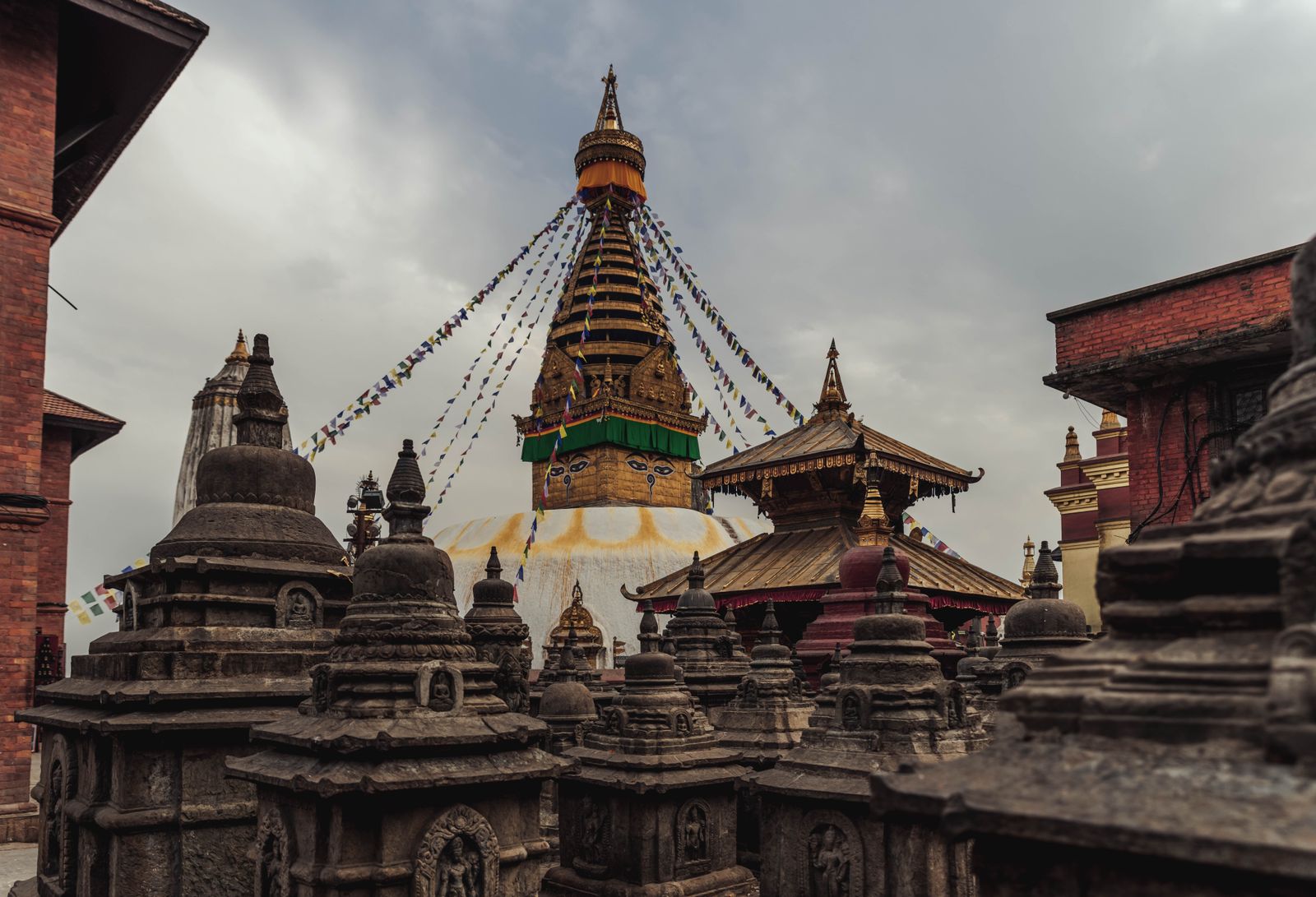
Kathmandu is the capital and the main entry point for air travellers. The city has three historic Durbar Squares: Kathmandu, Patan, and Bhaktapur. Each is a UNESCO World Heritage site with palaces, temples, and courtyards. Swayambhunath (the Monkey Temple) and Boudhanath Stupa are major Buddhist sites. Pashupatinath Temple on the Bagmati River is a sacred Hindu site. The Garden of Dreams offers a quiet retreat in the city centre. Thamel is the main tourist district, with shops, restaurants, and travel agencies. Allow at least three days to see the main sights.
Visit Bhaktapur Durbar Square early in the morning to avoid crowds. Dress modestly at temples; remove shoes before entering. Hire a licensed guide for the Durbar Squares to learn the history. Beware of monkeys at Swayambhunath; keep food and bags secure. For a panoramic view of the city, hike to the top of Swayambhunath or visit the hill station of Nagarkot, about an hour's drive from Kathmandu. Consider a day trip to the ancient town of Kirtipur or the Changu Narayan Temple, another UNESCO site.
- Visit Bhaktapur Durbar Square early in the morning to avoid crowds.
- Dress modestly at temples; remove shoes before entering.
- Hire a licensed guide for the Durbar Squares to learn the history.
- Beware of monkeys at Swayambhunath; keep food and bags secure.
Money and practical tips
The Nepalese rupee (NPR) is the local currency. Indian rupees are widely accepted in Nepal, but only notes of 100 and 200 are commonly taken. Larger Indian notes may be refused. Exchange money at banks or authorised exchange counters in Kathmandu. ATMs are plentiful in Kathmandu and Pokhara. Carry some cash for smaller shops and entry fees. Credit cards are accepted at larger hotels and restaurants. Tipping is not mandatory but is appreciated for good service. Bargaining is common in tourist markets.
Inform your bank and card provider before travel to avoid blocked transactions. Keep a photocopy of your passport separate from the original. For booking a stay, consider guesthouses and boutique hotels in Thamel or near the Durbar Squares. Many offer free airport pick-up if you book directly. Check reviews on travel websites before confirming. For longer stays, negotiate a weekly rate. Always confirm cancellation policies. For safety, avoid walking alone late at night in unfamiliar areas. Use registered taxis or ride apps for transport.